
-
Home
- About Us
- Products
- Application scenarios
- Download
- News

 Classify
- Company News
- Industry News
- FAQ
Industry News
Open vs closed ultrasonic transducers
2026-09-07Open vs closed ultrasonic transducersOpen vs closed ultrasonic transducers
The main differences between open and closed ultrasonic transducers lie in the following aspects due to their distinct structural designs:
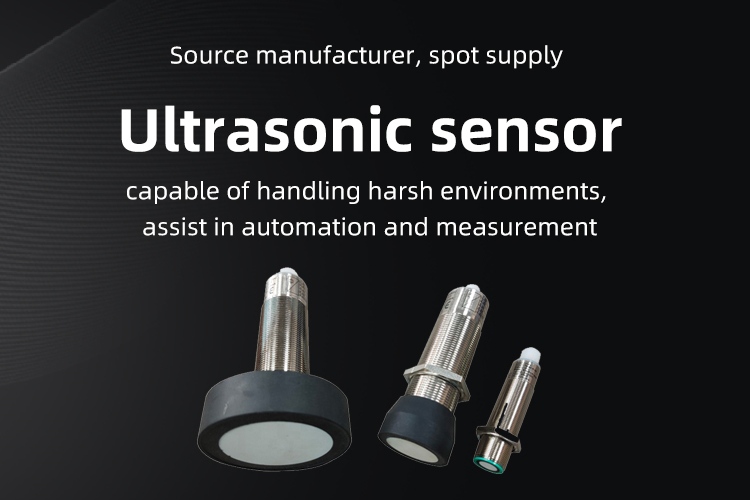
Open transducer: The piezoelectric diaphragm is directly exposed to the air, offering strong performance and low cost, but it is delicate and can only be used in controlled environments such as indoors. The diaphragm's direct contact with air results in high sensitivity, large sound pressure level, short reverberation, and small blind spots, making it suitable for precision ranging.
The required driving voltage is low (e.g., 10Vpp), the circuit is simple, directly drivable, and has a low cost.
Enclosed transducer: The piezoelectric diaphragm is sealed and protected by the housing, making it robust and durable, capable of withstanding harsh outdoor conditions. However, it requires high driving demands and incurs higher costs. The sealed protection of the diaphragm leads to performance losses, often necessitating higher driving voltages to achieve the same sound pressure level. The required driving voltage is high (typically exceeding 100Vpp), often requiring transformer-driven operation, resulting in complex circuits and elevated costs.
Open-type transducers are commonly found in toys and frequently used for indoor ranging, security alarms, smart homes, and similar applications. With simple manufacturing processes and low costs, open probes, apart from being waterproof and relatively fragile, also exhibit excellent electronic performance—especially high sensitivity. Consequently, their circuitry can be very straightforward, making them particularly suitable for toys. However, if an open probe is used outdoors, it may fail within a year at most.
Closed-type transducers are commonly used in automotive parking radars, outdoor liquid level detection, industrial proximity switches, and waterproof/dustproof equipment.
If the equipment needs to operate stably in outdoor or harsh environments (such as parking sensors), the sealed type is the best choice. If waterproofing is required, a waterproof probe must be used. In fact, the vast majority of industrial ultrasonic probes are waterproof.
Links:Service Hotline
+86 13923792185
Website:www.micmetering.com
Address:6th Floor, Block B, Area A, Qinghu Science and Technology Park, Longhua District, Shenzhen, Guangdong Province
Copyright © 2025 MIC Metering (Shenzhen) Limited 粤ICP备2025358196号-1 Cookies Policy-
Service Hotline
Service Hotline
+86 13923792185
-
WeChat

-
TOP
Our Cookie Usage Policy
Our website uses cookies and other similar technologies to distinguish you from other users of our website. This helps us provide you with a good experience when you browse our website and allows us to improve our website. For more information, please refer to our Cookie Policy. - About Us